Retirement

What to Expect in Your First Year of Retirement
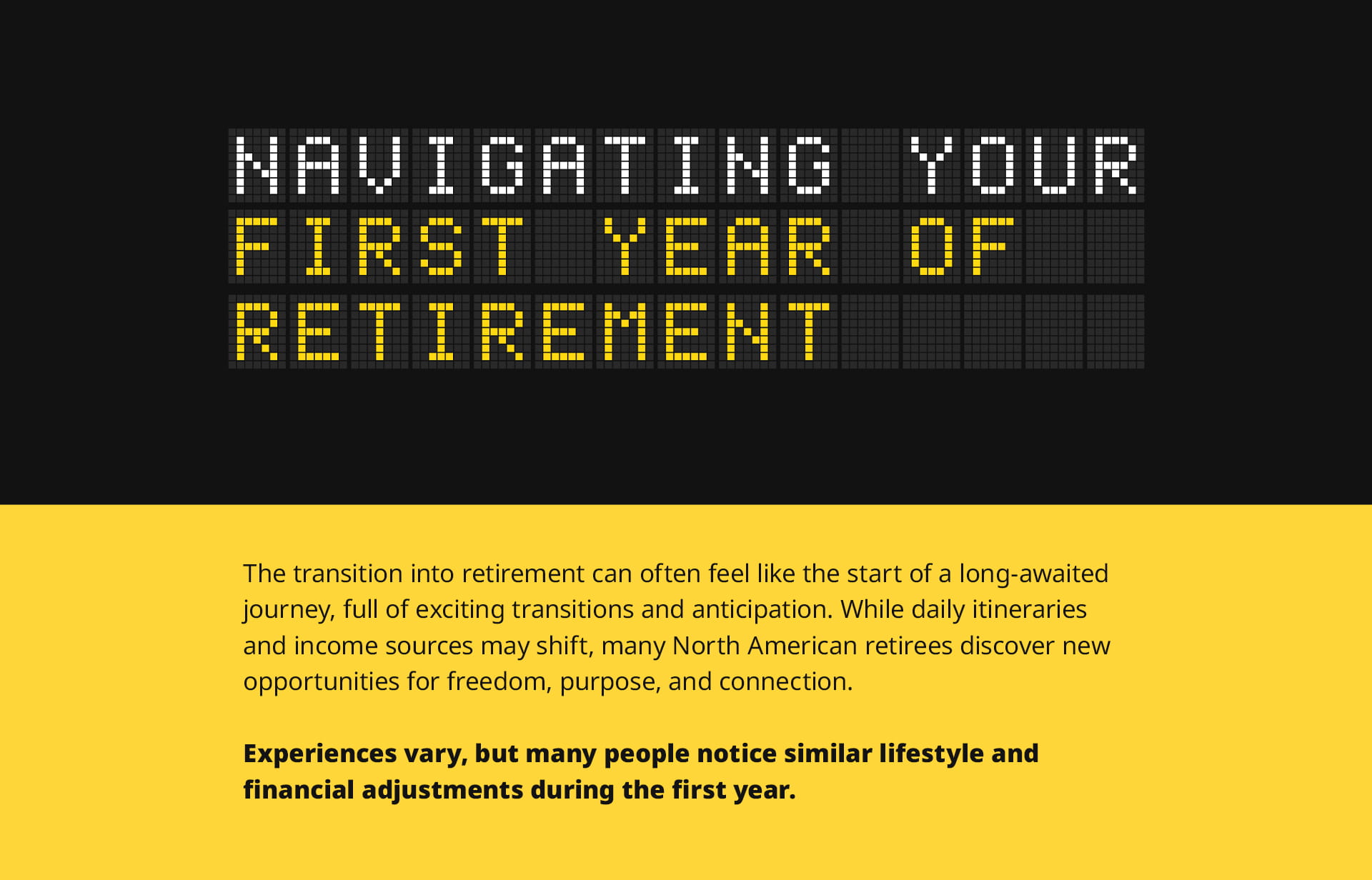
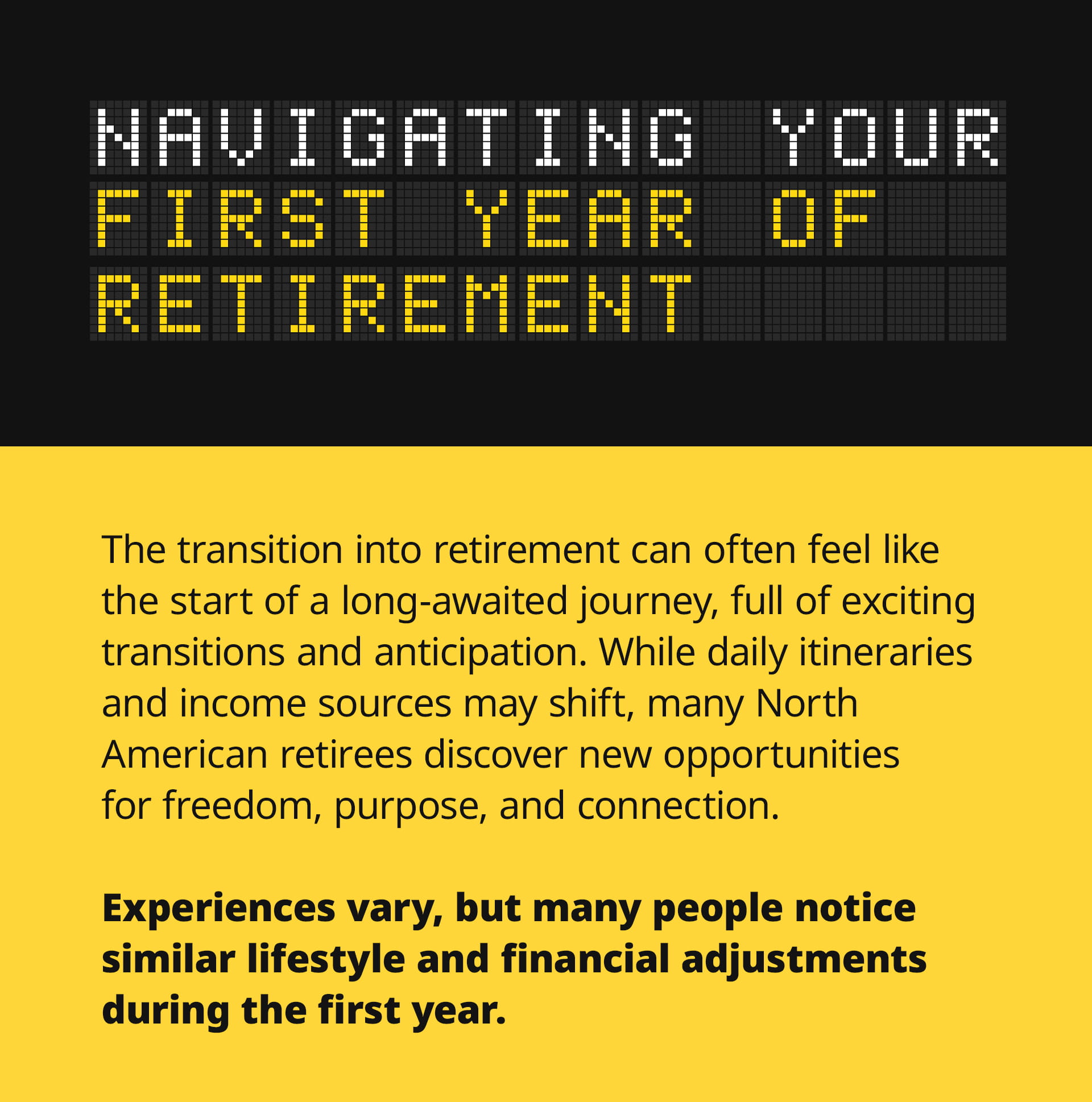
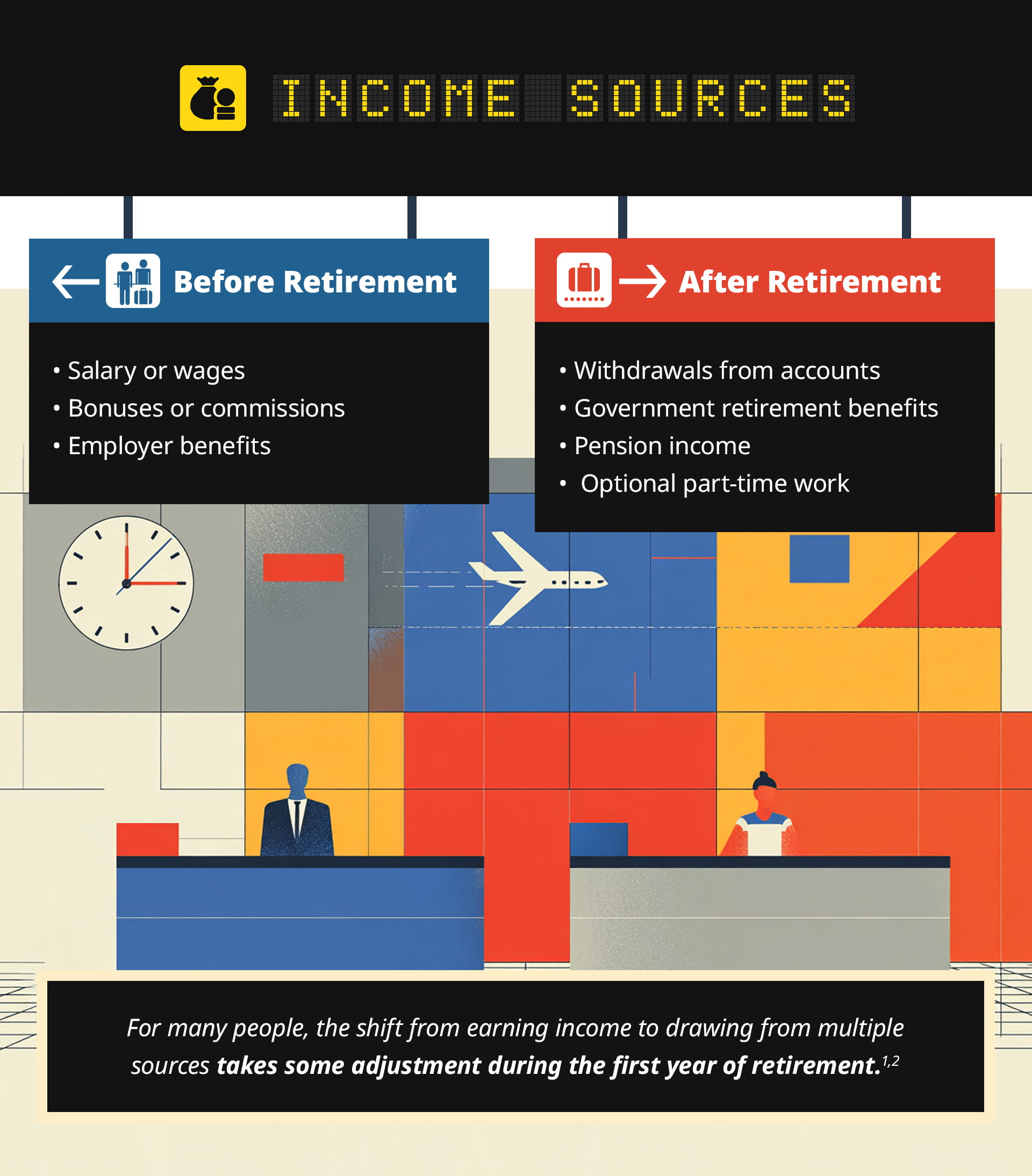
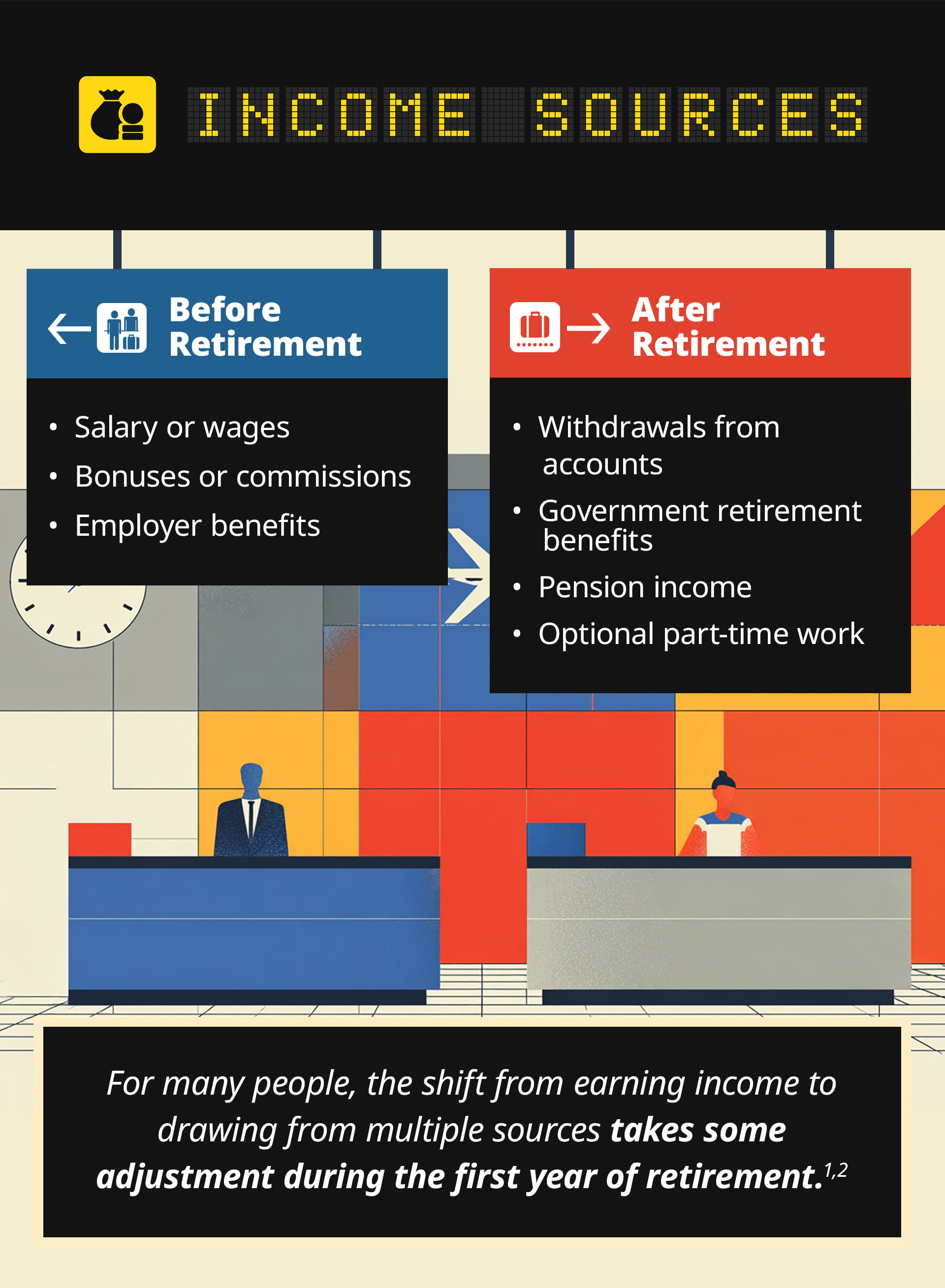
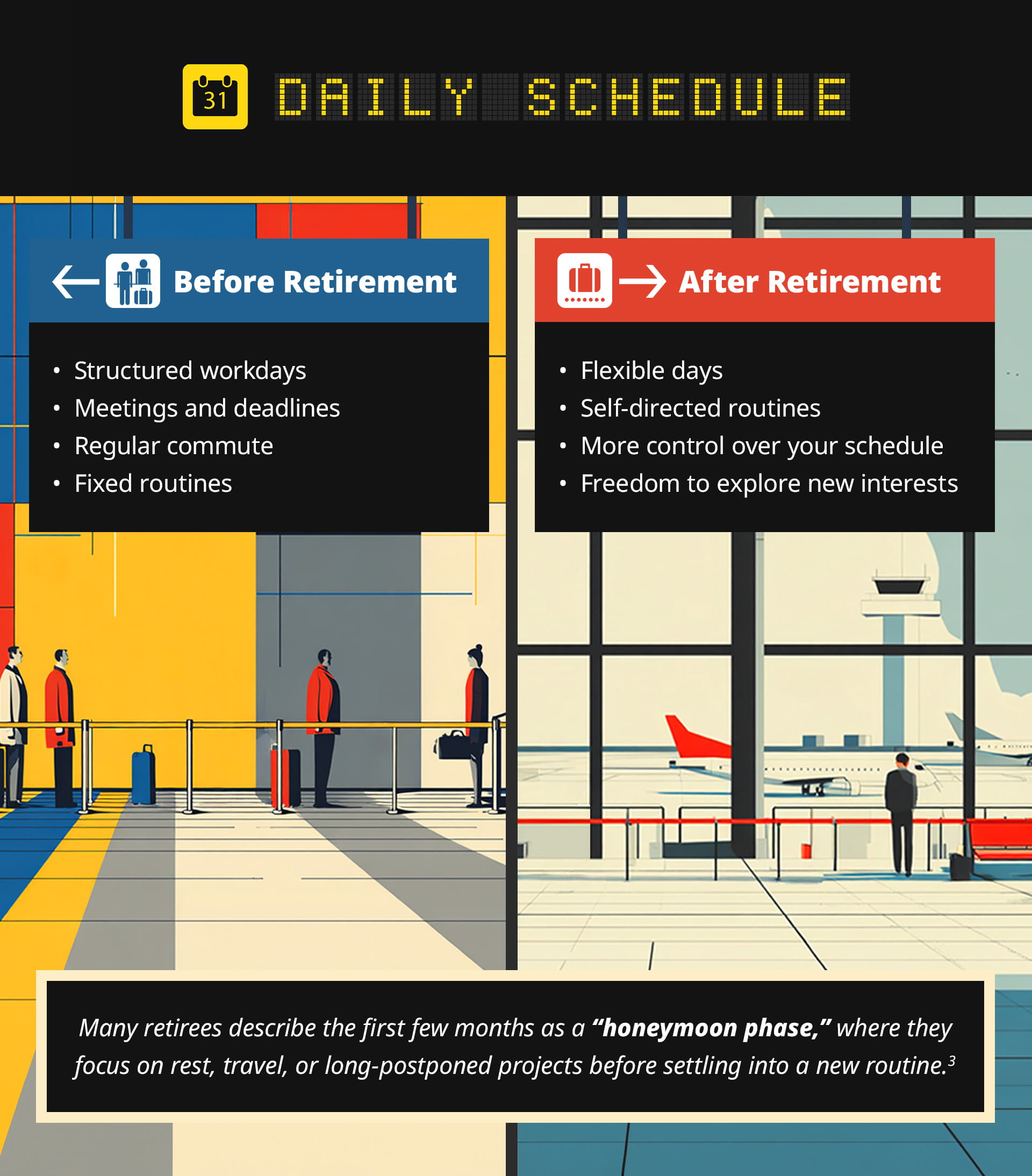
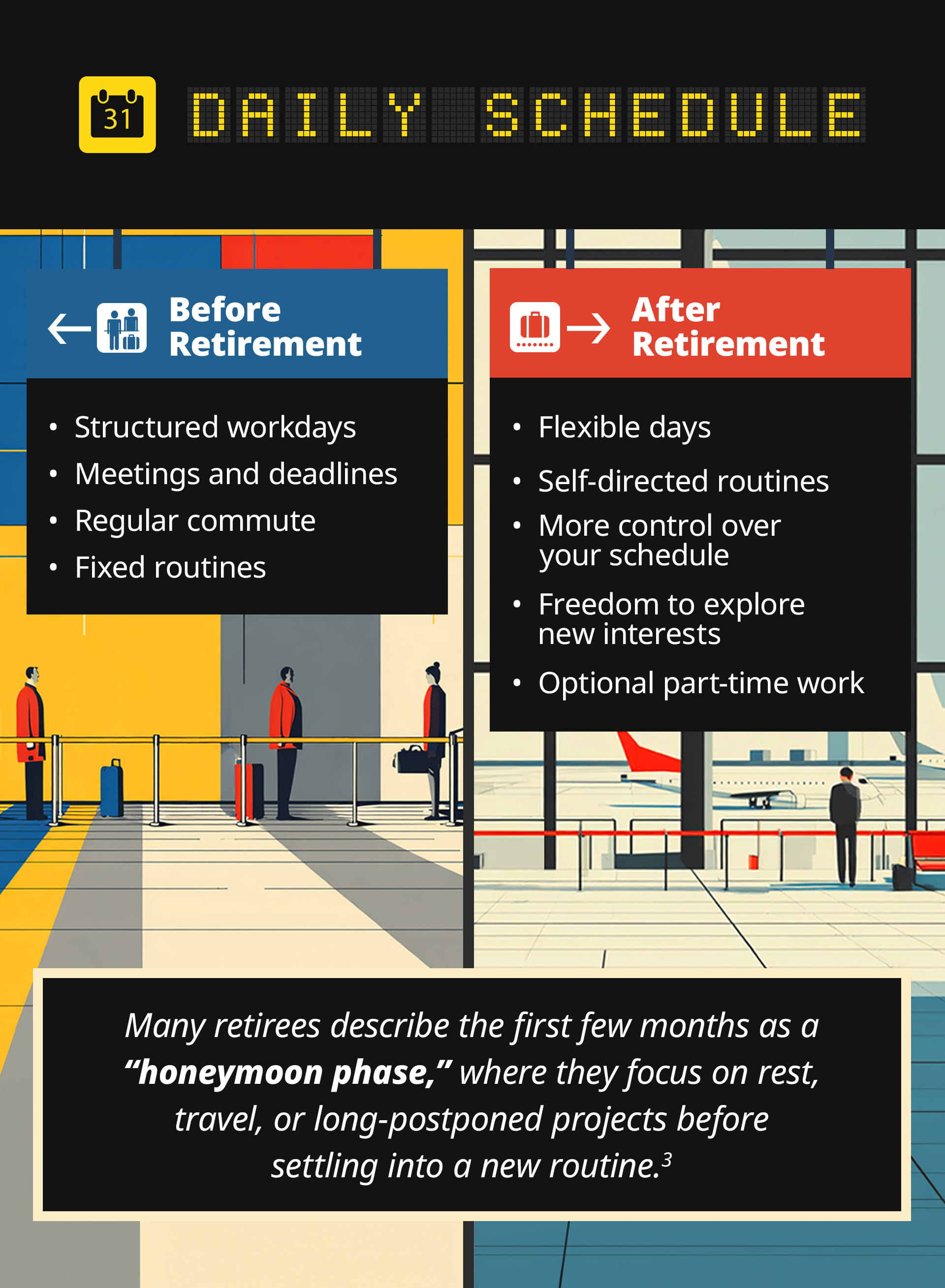
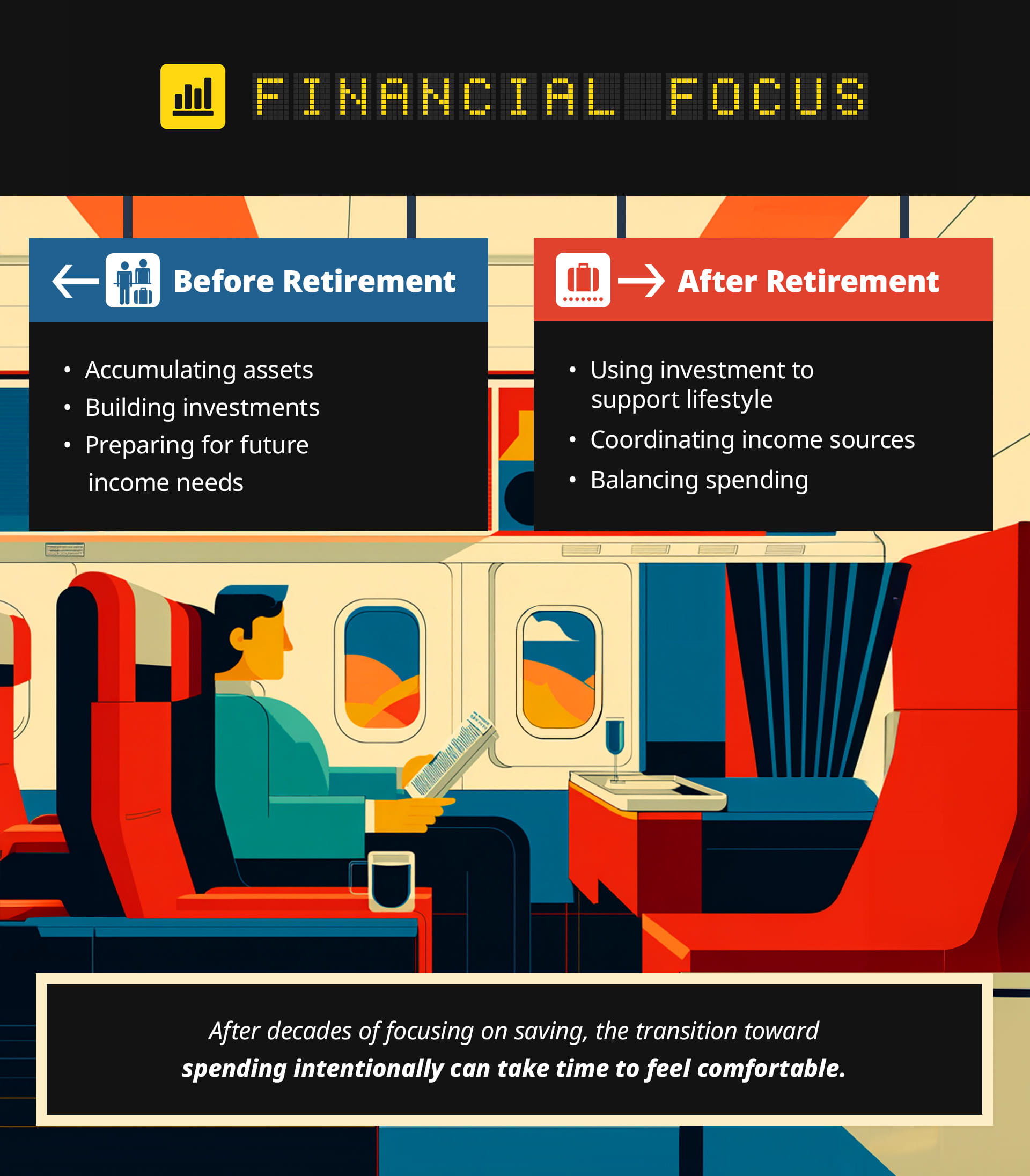
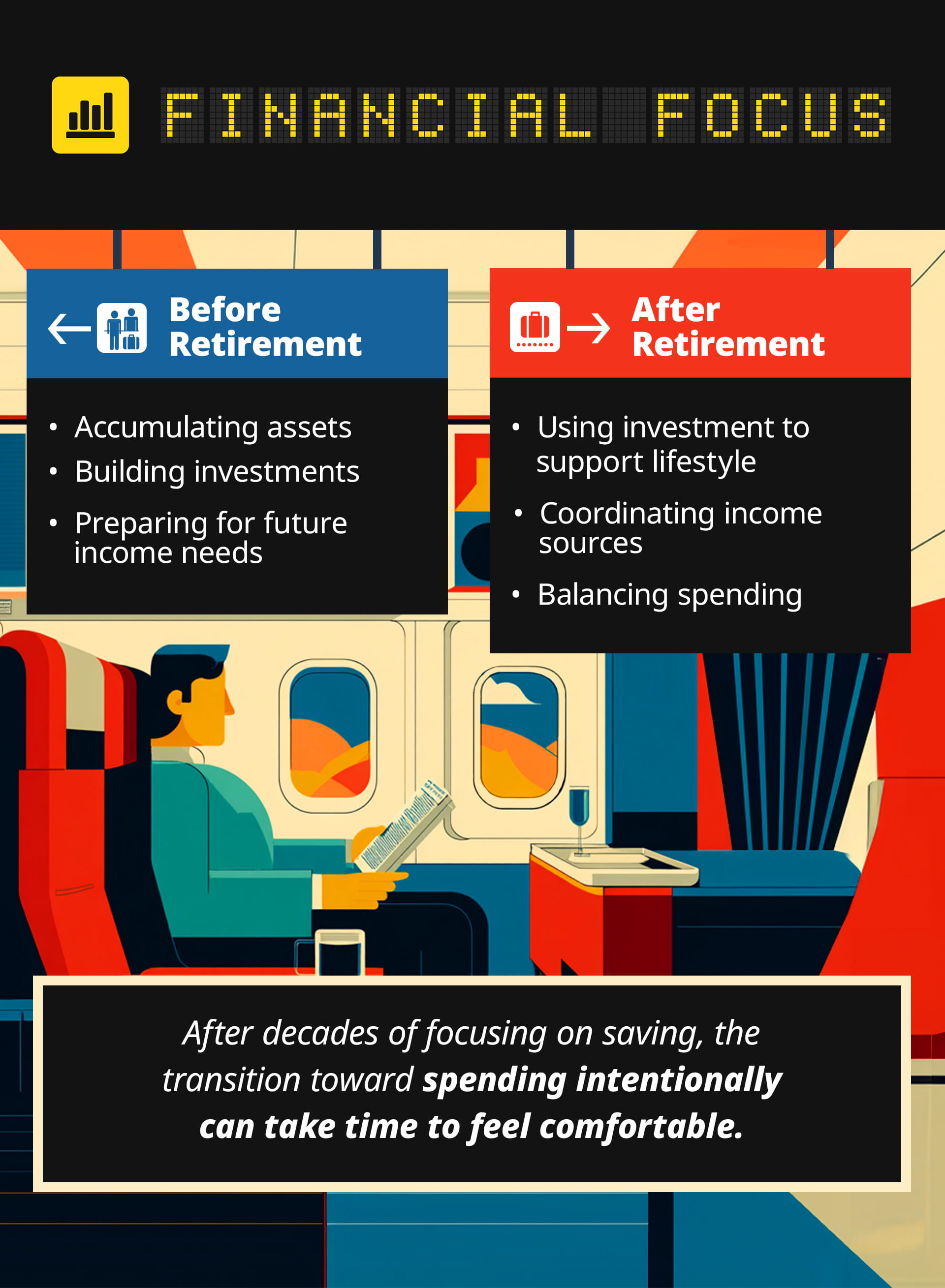
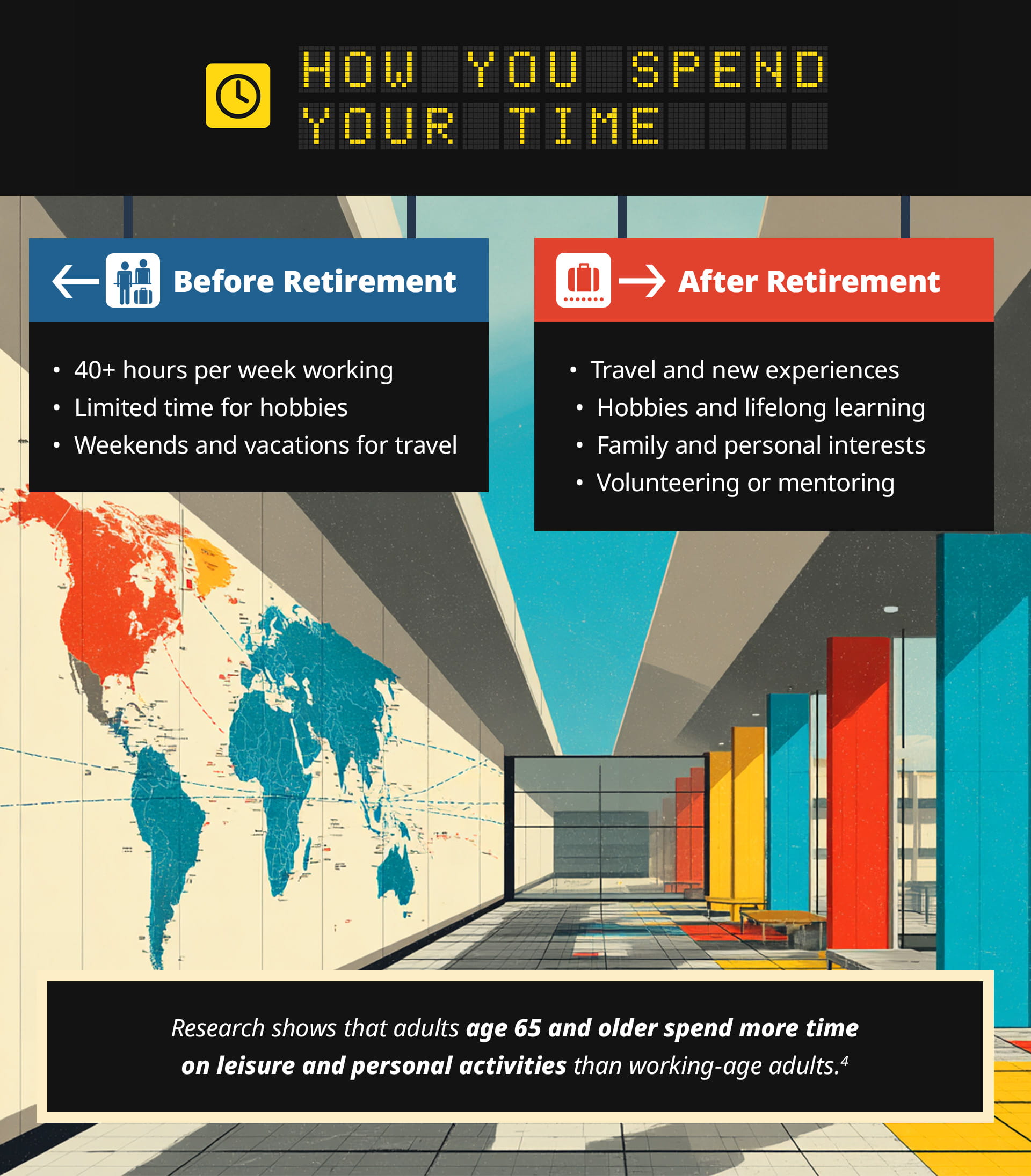
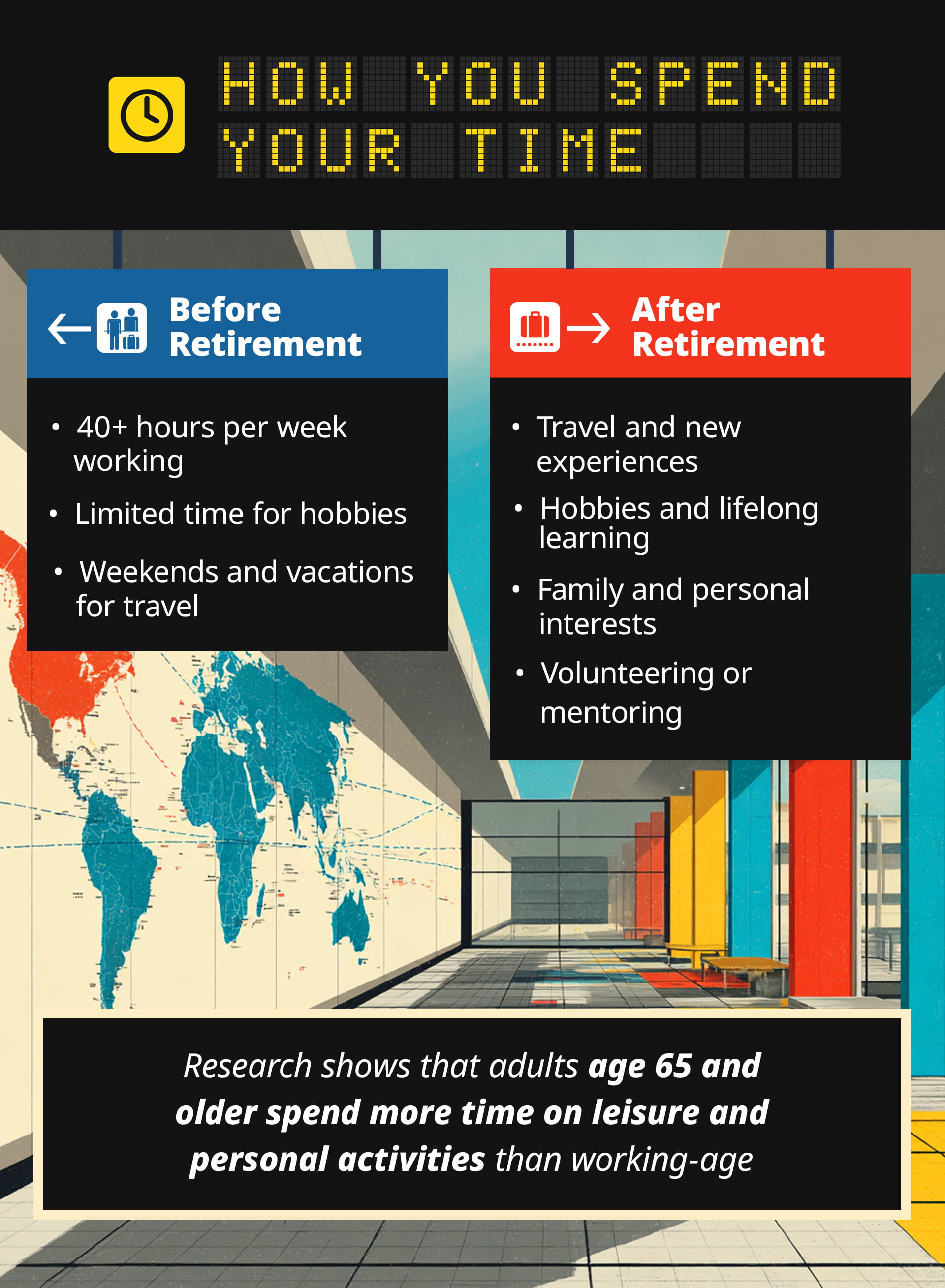
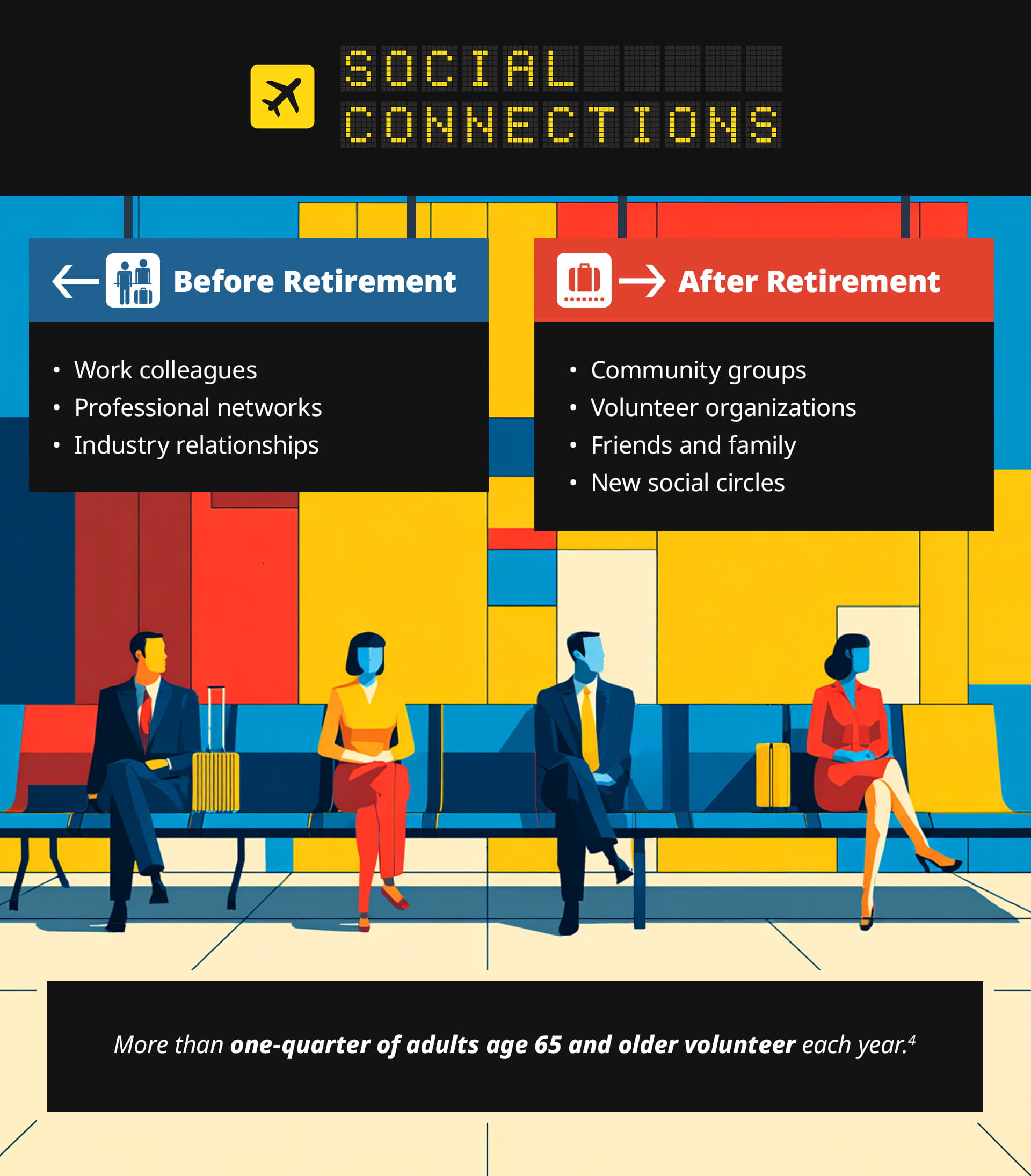
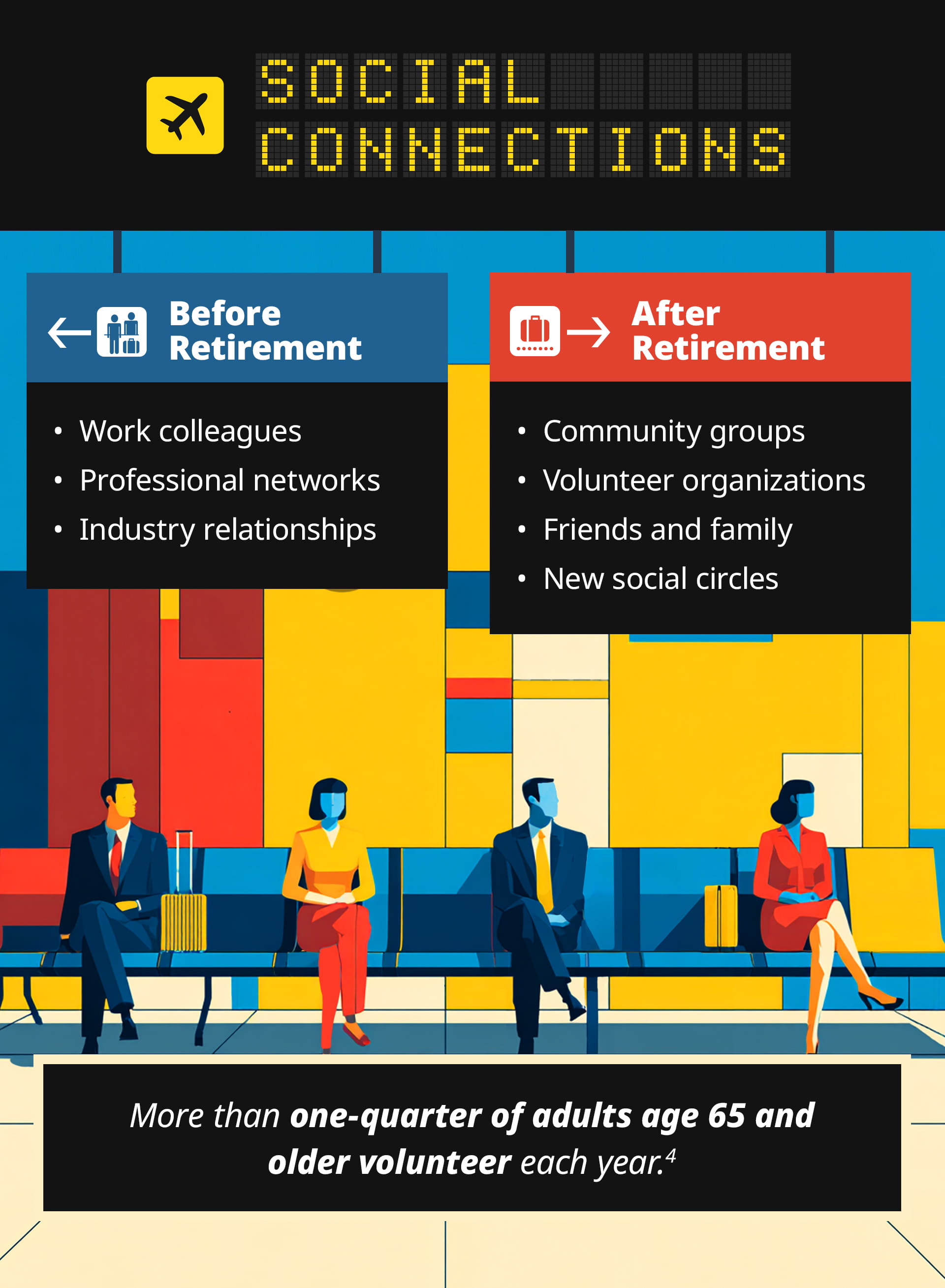
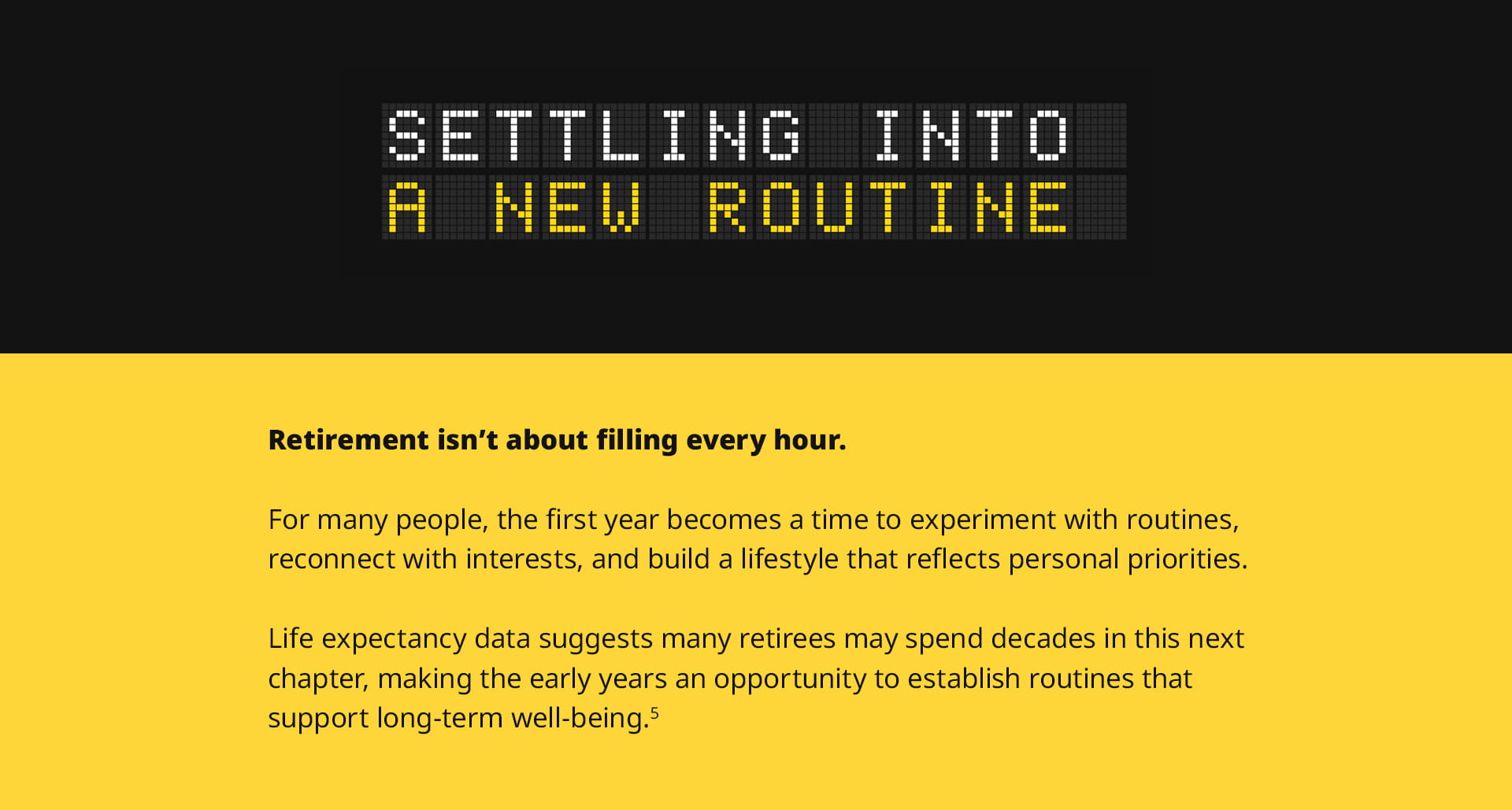
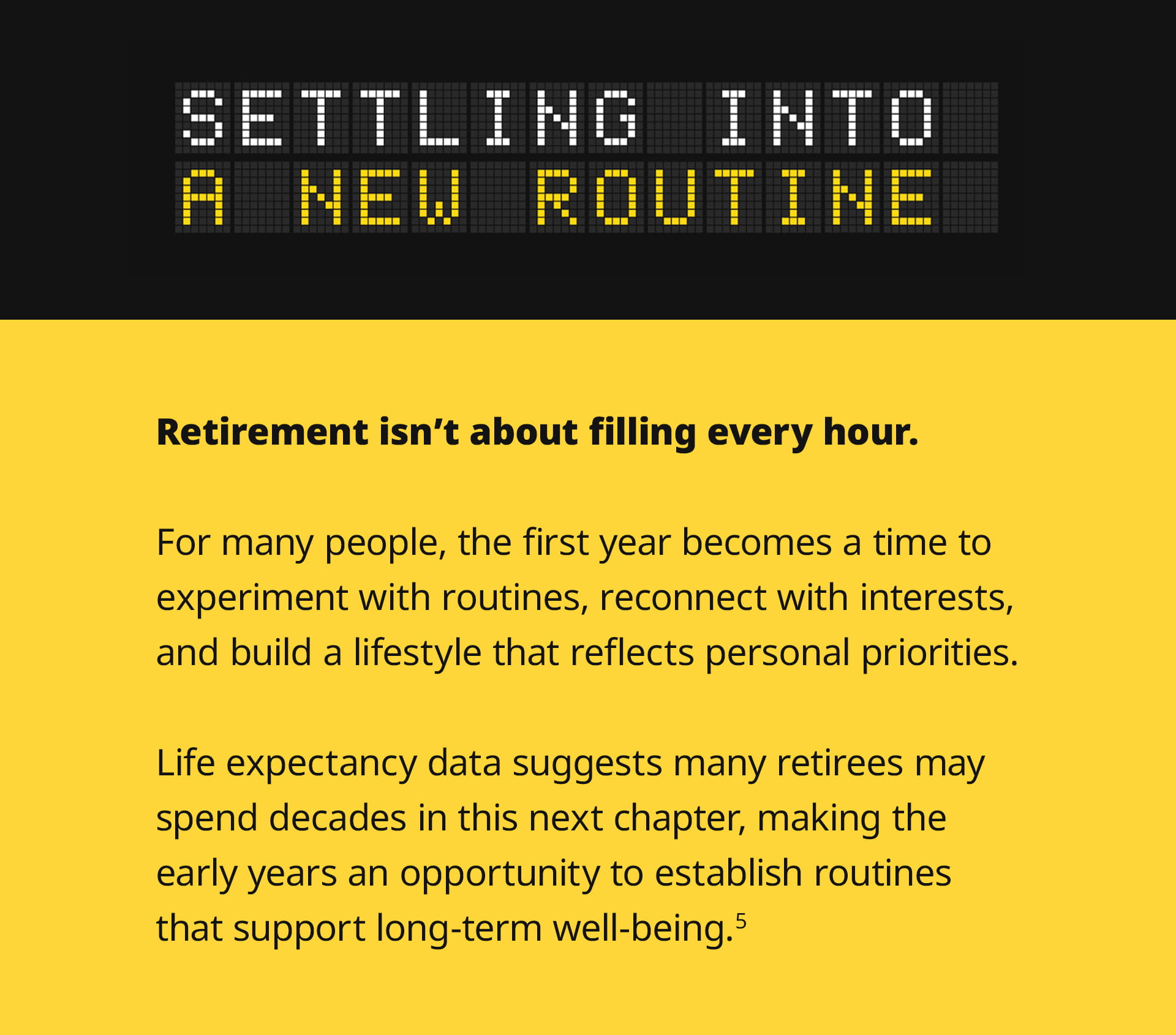
This is an educational infographic on navigating the first year of retirement. It uses an airport departure board theme with bold yellow and white lettering on a black background. The title reads: Navigating Your First Year of Retirement. Introductory text on a yellow background explains that the transition into retirement can feel like the start of a long-awaited journey, full of exciting transitions and anticipation. While daily itineraries and income sources may shift, many North American retirees discover new opportunities for freedom, purpose, and connection. Experiences vary, but many people notice similar lifestyle and financial adjustments during the first year.This is an educational infographic on navigating the first year of retirement. It uses an airport departure board theme with bold yellow and white lettering on a black background. The title reads: Navigating Your First Year of Retirement. Introductory text on a yellow background explains that the transition into retirement can feel like the start of a long-awaited journey, full of exciting transitions and anticipation. While daily itineraries and income sources may shift, many North American retirees discover new opportunities for freedom, purpose, and connection. Experiences vary, but many people notice similar lifestyle and financial adjustments during the first year.The first section, titled Income Sources, compares pre- and post-retirement income using blue and red airport-style signage panels. Before Retirement lists salary or wages, bonuses or commissions, and employer benefits. After retirement, lists withdrawals from accounts, government retirement benefits, pension income, and optional part-time work. The illustration shows an airport scene with a clock, an airplane, and figures at check-in counters. A callout reads: For many people, the shift from earning income to drawing from multiple sources takes some adjustment during the first year of retirement.The first section, titled Income Sources, compares pre- and post-retirement income using blue and red airport-style signage panels. Before Retirement lists salary or wages, bonuses or commissions, and employer benefits. After retirement, lists withdrawals from accounts, government retirement benefits, pension income, and optional part-time work. The illustration shows an airport scene with a clock, an airplane, and figures at check-in counters. A callout reads: For many people, the shift from earning income to drawing from multiple sources takes some adjustment during the first year of retirement.The second section, titled Daily Schedule, compares the daily structure before and after retirement. Before retirement, lists structured workdays, meetings, and deadlines; regular commute; and fixed routines. After Retirement offers flexible days, self-directed routines, more control over your schedule, and freedom to explore new interests. The illustration shows figures in an airport terminal with queue barriers and a plane visible through the windows. A callout reads: Many retirees describe the first few months as a honeymoon phase, where they focus on rest, travel, or long-postponed projects before settling into a new routine.The second section, titled Daily Schedule, compares the daily structure before and after retirement. Before retirement, lists structured workdays, meetings, and deadlines; regular commute; and fixed routines. After Retirement offers flexible days, self-directed routines, more control over your schedule, and freedom to explore new interests. The illustration shows figures in an airport terminal with queue barriers and a plane visible through the windows. A callout reads: Many retirees describe the first few months as a honeymoon phase, where they focus on rest, travel, or long-postponed projects before settling into a new routine.The third section, titled How You Spend Your Time, compares time use before and after retirement. Before retirement, lists 40+ hours per week working; limited time for hobbies; and weekends and vacations for travel. After retirement, lists travel and new experiences; hobbies and lifelong learning; family and personal interests; and volunteering or mentoring. The illustration shows an airport corridor with a colorful world map on the wall. A callout reads: Research shows that adults age 65 and older spend more time on leisure and personal activities than working-age adults.The third section, titled How You Spend Your Time, compares time use before and after retirement. Before retirement, lists 40+ hours per week working; limited time for hobbies; and weekends and vacations for travel. After retirement, lists travel and new experiences; hobbies and lifelong learning; family and personal interests; and volunteering or mentoring. The illustration shows an airport corridor with a colorful world map on the wall. A callout reads: Research shows that adults age 65 and older spend more time on leisure and personal activities than working-age adults.The fourth section, titled Social Connections, compares social life before and after retirement. Before retirement, they list work colleagues, professional networks, and industry relationships. After retirement, lists community groups, volunteer organizations, friends, and family, and new social circles. The illustration shows four people seated in an airport waiting area against a colorful geometric background. A callout reads: More than one-quarter of adults age 65 and older volunteer each year.The fourth section, titled Social Connections, compares social life before and after retirement. Before retirement, they list work colleagues, professional networks, and industry relationships. After retirement, lists community groups, volunteer organizations, friends, and family, and new social circles. The illustration shows four people seated in an airport waiting area against a colorful geometric background. A callout reads: More than one-quarter of adults age 65 and older volunteer each year.The fifth section, titled Financial Focus, compares financial priorities before and after retirement. Before retirement, list accumulating assets, building investments, and preparing for future income needs. After retirement, lists using investments to support lifestyle, coordinating income sources, and balancing spending. The illustration shows a passenger reading on an airplane with red seats. A callout reads: After decades of focusing on saving, the transition toward spending intentionally can take time to feel comfortable.The fifth section, titled Financial Focus, compares financial priorities before and after retirement. Before retirement, list accumulating assets, building investments, and preparing for future income needs. After retirement, lists using investments to support lifestyle, coordinating income sources, and balancing spending. The illustration shows a passenger reading on an airplane with red seats. A callout reads: After decades of focusing on saving, the transition toward spending intentionally can take time to feel comfortable.The sixth section, titled Settling Into a New Routine, offers closing thoughts. It reads: Retirement isn't about filling every hour. For many people, the first year becomes a time to experiment with routines, reconnect with interests, and build a lifestyle that reflects personal priorities. Life expectancy data suggests many retirees may spend decades in this next chapter, making the early years an opportunity to establish routines that support long-term well-being.The sixth section, titled Settling Into a New Routine, offers closing thoughts. It reads: Retirement isn't about filling every hour. For many people, the first year becomes a time to experiment with routines, reconnect with interests, and build a lifestyle that reflects personal priorities. Life expectancy data suggests many retirees may spend decades in this next chapter, making the early years an opportunity to establish routines that support long-term well-being.The sources section lists five references: Social Security Administration Retirement Benefits, 2026; Canada Pension Plan, Canada.ca, March 2024; AARP, May 28, 2025; AmericanHealthRankings.org, 2026; and OECD Life Expectancy at Age 65, 2026.The sources section lists five references: Social Security Administration Retirement Benefits, 2026; Canada Pension Plan, Canada.ca, March 2024; AARP, May 28, 2025; AmericanHealthRankings.org, 2026; and OECD Life Expectancy at Age 65, 2026.

Have A Question About This Topic?

Thank you! Oops!

Related Content

Disability Income

Disability Income

This calculator estimates your chances of becoming disabled and your potential need for disability insurance.

When Special Care Is Needed: The Special Needs Trust

When Special Care Is Needed: The Special Needs Trust

A special needs trust helps care for a special needs child when you’re gone.

Retirement Strategy After a Job Loss

Retirement Strategy After a Job Loss

Job loss can shake both finances and confidence, reassessing your retirement strategy is key to moving forward with clarity.